


Many districts have invested heavily in special education staffing in recent years. Many are also finding that student outcomes haven’t moved the way they hoped. Glenbrook High School District 225, just north of Chicago, was one of them. The district has a long-standing commitment to students with disabilities, and in recent years has steadily added special education staff to better serve those students and the educators who work with them. Despite this increased investment, student achievement did not grow at the rate the district expected, and a persistent gap remained between students with and without IEPs. In spring 2025, the district partnered with District Management Group (DMG) to take a deep analysis of their special education practices and how district systems support their work. The findings from the Special Education Opportunity Review provided insights that have led the district to create a three-year plan to strengthen the ways staff support students.
Analyzing the Situation
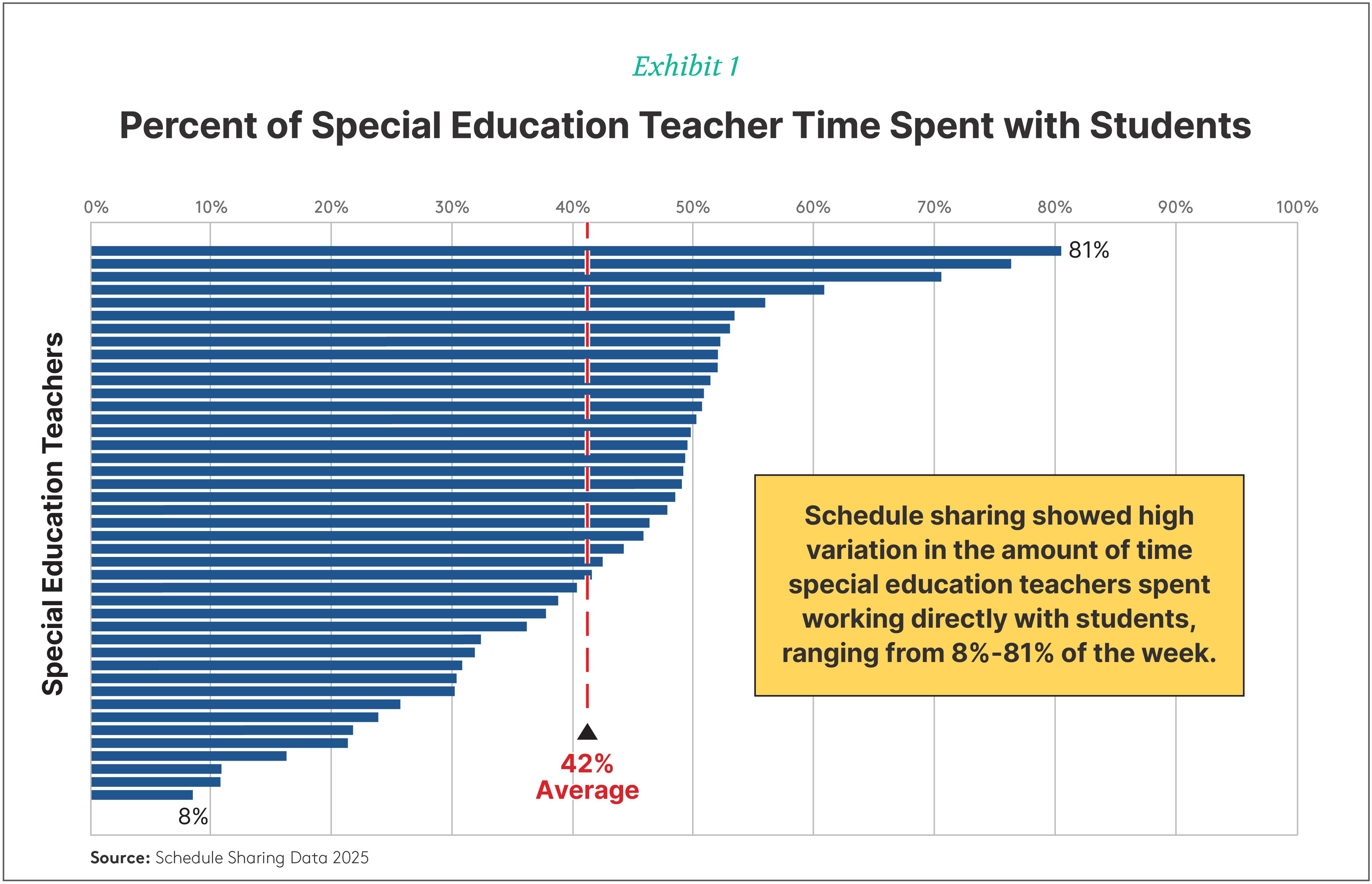
DMG’s Special Education Opportunity Review is rooted in both qualitative and quantitative data, and leans on a Guiding Coalition of district and school leaders to champion and guide the work. The work began with interviews and focus groups, engaging with stakeholders ranging from the Superintendent to instructional assistants. Additionally, 207 special education-related staff across seven roles were invited to share their schedules for a period of one week through DMG’s schedule-sharing software, and 88% participated. The information was analyzed alongside achievement, staffing, inclusion, and financial data.
Key Findings and Opportunities
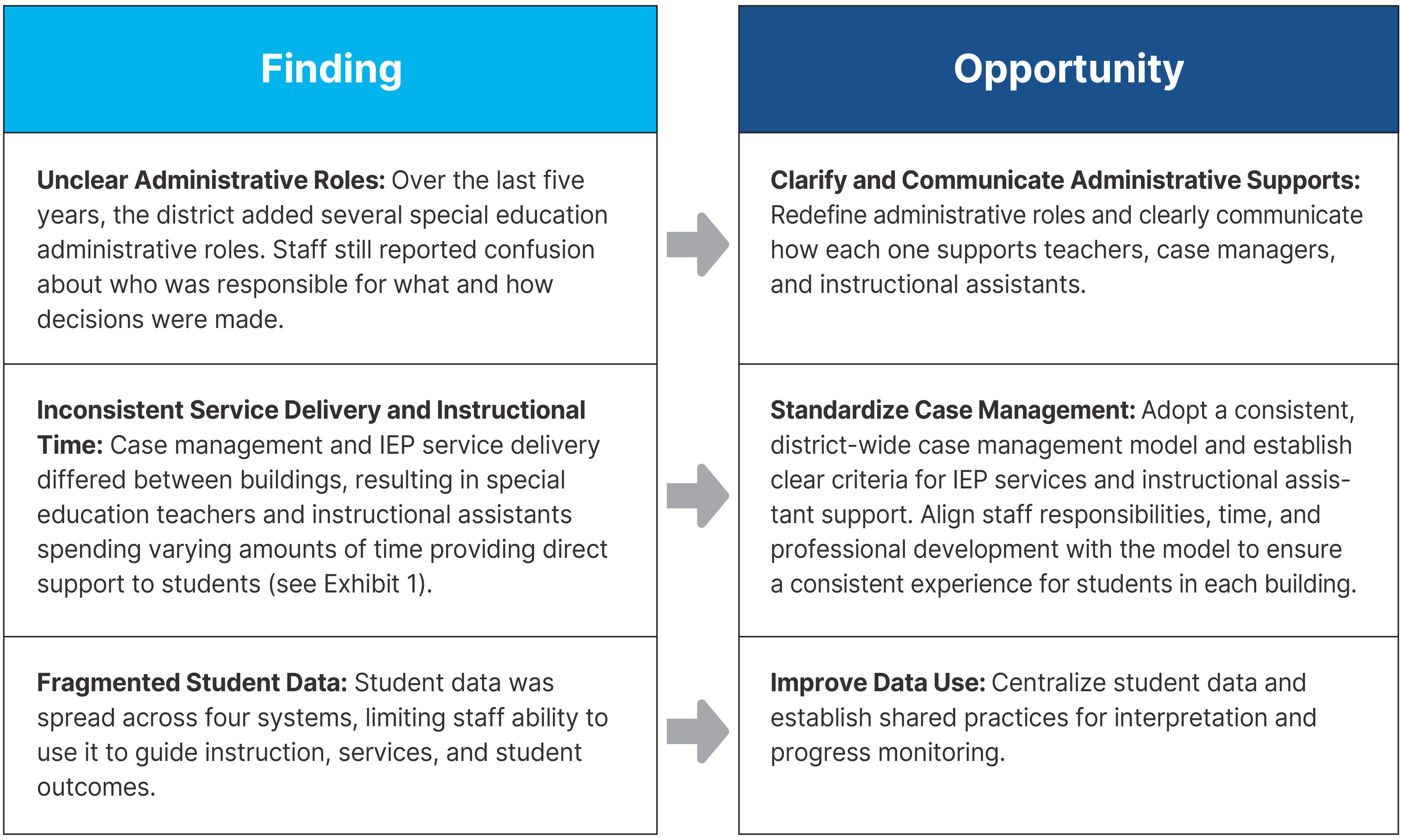
Based on the work, DMG highlighted several commendations within the district’s Student Supports department: a high staff retention rate, a strong in-house continuum of services, and an extremely collaborative culture. DMG also identified three key findings that pointed to specific opportunities for meaningful improvement:
Glenbrook Takes Action
District leaders and more than 20 staff volunteers, including teachers, psychologists, SLPs, and social workers, turned DMG’s findings into the district’s own three-year plan. The plan is organized around six workstreams: roles and responsibilities; resource model and case management; data and documentation; the academic and related services continuum; professional learning; and communication.
Four guiding principles hold the plan together: put students’ needs first, settle questions of clarity before making changes, protect what is already working, and reduce workload burdens on staff.
As the team set priorities, they determined that all six workstreams needed to begin in year one, though at different levels of intensity. Roles and responsibilities, the resource and case management model, and communication are the immediate priorities. Work on data and documentation, the continuum of services, and professional learning will continue to develop over the three-year period.
Glenbrook is now in the first year of implementation. Each workstream is led by a staff committee that sets its own goals. Buildings are working from shared guidelines, and a clear system of administrative support has been established. As the Assistant Superintendent of Student Supports explained, “We’re talking the same language now. We’re not making decisions in a vacuum. We’re engaging with staff to help come up with the solutions.”
The Takeaway
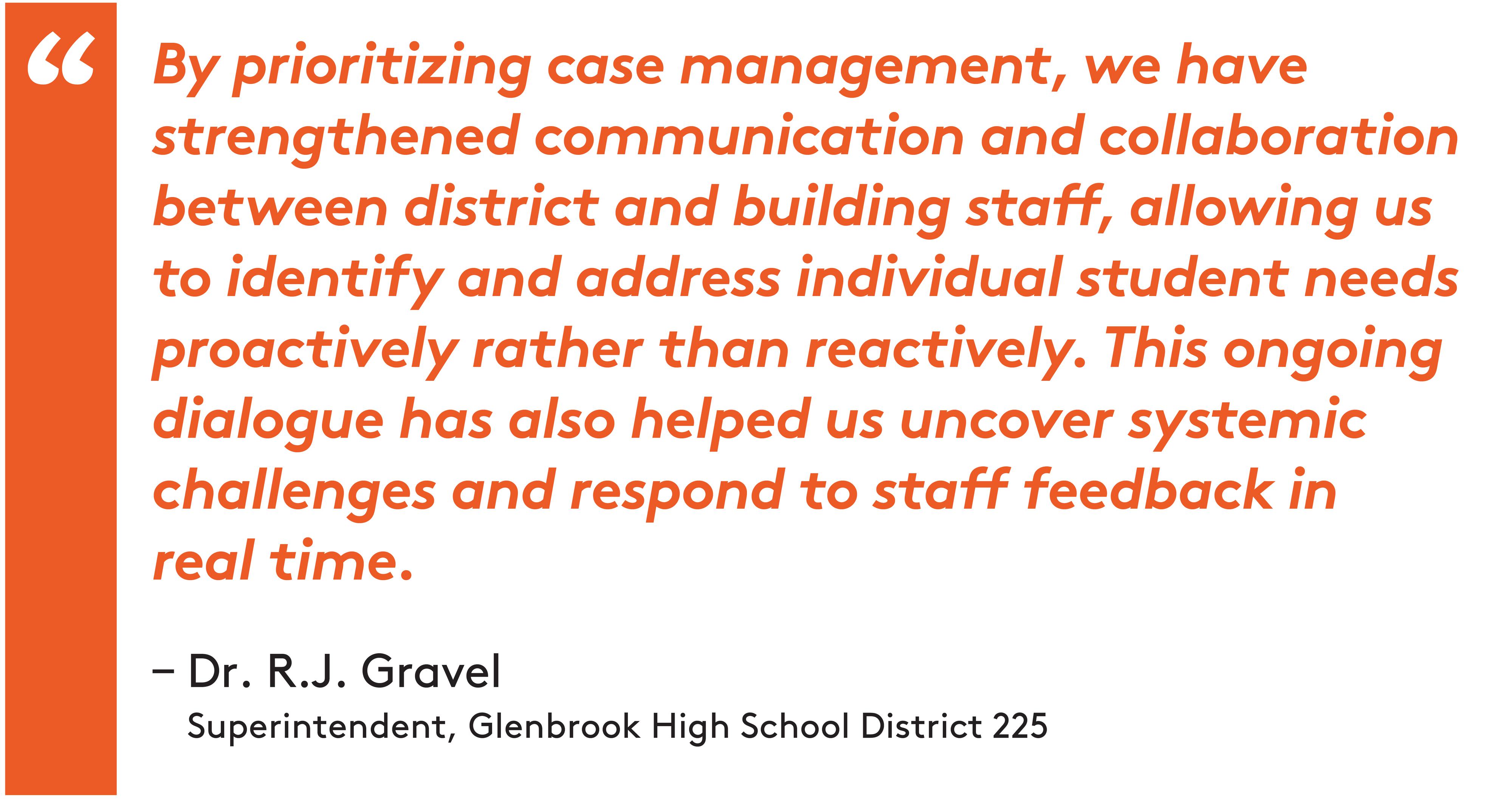
Spending more doesn’t improve outcomes on its own. Glenbrook had added staff, but without clear roles, consistent use of staff time, and data that was easy to use, those investments couldn’t reach students the way the district intended. Glenbrook’s experience shows what becomes possible when a district pauses to look at the systems behind its supports, then invites staff to help build what comes next. “By prioritizing case management, we have strengthened communication and collaboration between district and building staff, allowing us to identify and address individual student needs proactively rather than reactively,” said Dr. R.J. Gravel, superintendent. “This ongoing dialogue has also helped us uncover systemic challenges and respond to staff feedback in real time.”
Before adding more, district leaders might ask:
Are administrative roles and decision-making processes clear to staff?
Can students and families expect consistent, individualized services across buildings?
Are special education teachers and instructional assistants spending their time where it matters most for students?
Do staff have timely access to the information they need to make decisions about student services and support?
DMG’s Special Education Opportunity Review combines staff voice with data analysis to show how roles, time, and resources can best support students, and positions district teams to turn those insights into an actionable plan.